LAUNCH PRICE · $22 $45 · 80 lessons

Forty-two years of watching carts, now written down plainly.

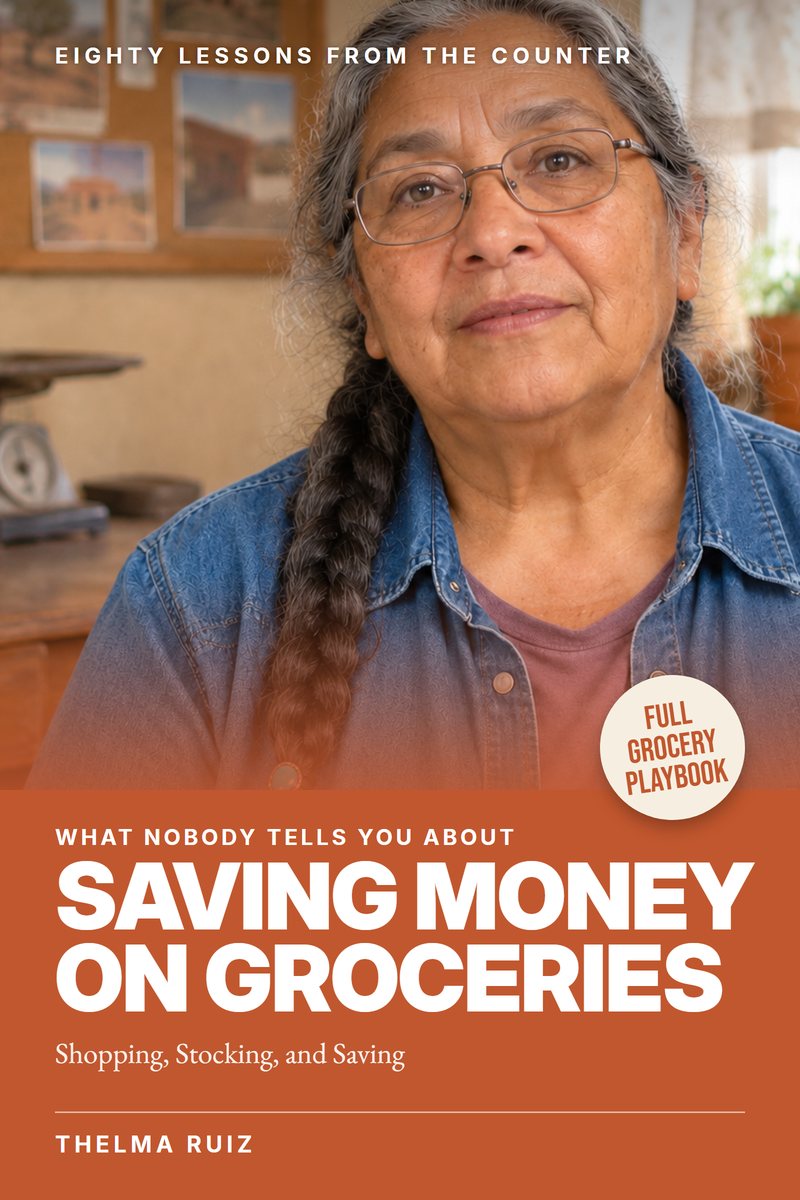
What Nobody Tells You About Saving Money on Groceries — Volume One cover
Digital books from the Thelma's Plain Truth channel

What Nobody Tells You About Saving Money on Groceries

80 lessons from 42 years of watching what families bought, stocked, and wasted
“A grocery bill doesn't lie about how careful you've been.”— what raising three kids alone on a postal clerk's wage taught her

Eighty lessons on shopping, stocking, cooking, and not wasting what you already bought — built from a price book, not a theory. Six sections carry you from the first list on the fridge door to a price memory you can trust at any shelf. Every lesson has a drawing, the mistakes people actually make, and where the method stops working. It's a method built out of forty-two years of watching carts and receipts — not a diet, not an app, and not a lecture.

42 YEARS AT ONE COUNTERRAISED THREE KIDS ALONEEVERY FAMILY'S MAIL, EVERY WEEK
  • 14-day money-back guarantee. Write to us and you get your money back.
  • Bonus: The Kitchen Survival Cheat Sheet — one page to print, every number that matters
  • Pay once · yours to keep · no subscription
  • Secure checkout · the PDF is sent to your email

By buying you agree to the Terms of Sale and Refund Policy.

0 people went to checkout in the last 24 hours

PDF · 264 pages · 80 illustrated lessons · read on phone, tablet or computer, or print it
80Numbered lessons
6Parts
246Problems in the index
14 daysMoney-back guarantee
Not a recipe book

This isn't about what to cook tonight.

It's for the week your list falls apart before you even reach the register, when the cart fills up faster than the budget does. This book is for the moment you decide to actually track where the money goes, instead of guessing again next week.

What you needThe exact tools, no more — paper, pencil, patience, a fridge door.
How it goesPlain numbered steps, in the order you'd actually do them.
Why it worksThe reason behind the habit, stated once, plainly.
How people ruin itNamed mistakes, the sign they're happening, and the plain fix.
Where it doesn't holdSaid honestly — when this method stops being the right one.
What makes it different

Built for the day it goes wrong

Look up the failure

246 named problems sit in a back-of-book index. You find your exact trouble — soggy lettuce, a double-scanned coupon, a bill that keeps climbing — and go straight to the lesson that fixes it, no browsing six sections first.

Three hundred mistakes, named

263 named mistakes sit inside the lessons themselves, each with the sign you'd notice at your own house and the fix — not vague warnings, the actual way it goes wrong.

A reference, not a rulebook

225 numbers — amounts, temperatures, timeframes — sit in their own reference section, so you're not hunting through paragraphs for the one figure you needed.

Drawn, not photographed

All 80 lessons carry their own drawing, not a stock photo of a stranger's pantry.

THE ARITHMETIC

What a tracked list is worth

A family spending around $200 a week on groceries who starts a running list on the fridge door, checks unit prices at the shelf, and does a weekly fridge clean-out typically cuts the bill by something like 10 to 20 percent — mostly by buying less of what used to get thrown out, not by eating less. That's roughly $20 to $40 back most weeks, without a single coupon.

These are typical figures and will vary by household, store, and how closely the list gets kept.

What you'll be able to do

After the book

  • Build a running list that catches what's actually low, not what you remember at the store.
  • Read a unit price and a sale tag without doing math in your head at the shelf.
  • Stock a pantry that rotates itself, with dates you actually check.
  • Cook a week of meals around what's already in the freezer and what's on sale.
  • Keep a price book that tells you, at a glance, whether today's price is really a deal.
VOLUME ONE · SIX PARTS

From The List Before the List to Building Your Own Price Memory

Eighty lessons move from the first list on the fridge door through stocking, cooking, and waste, ending with the one habit that ties all the others together.

Part OneWhat Careful Shoppers Did at the StoreReading the store the way it's built against you, and shopping it anyway.
Part TwoPlanning Meals Around a BudgetTurning a week's budget into an actual menu before you ever touch a cart.
Part ThreeBuilding a Pantry That LastsStocking the shelf so you're never caught short or buying at full price.
Part FourCheap Meals That Still SatisfyDinners built from staples that still land well on the table.
Part FiveCutting Food WasteKeeping food out of the trash with a few plain habits.
Part SixPrices to Watch and Stores to CompareKnowing a real price when you see one, store to store.
From inside the book

Every lesson has a drawing

All 80 lessons carry a drawing that shows the habit in use, not a stock photo of someone else's kitchen.

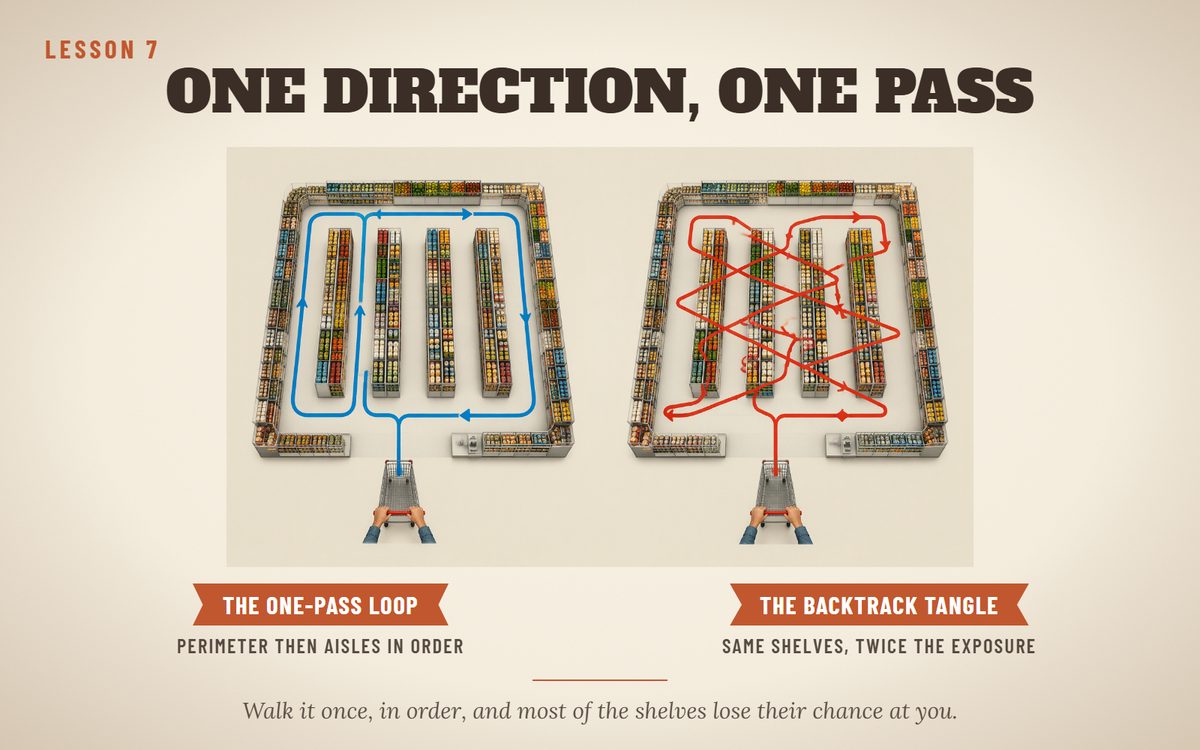
Lesson 7 drawing
Lesson 7 · page 25 · One Cart, One Pass
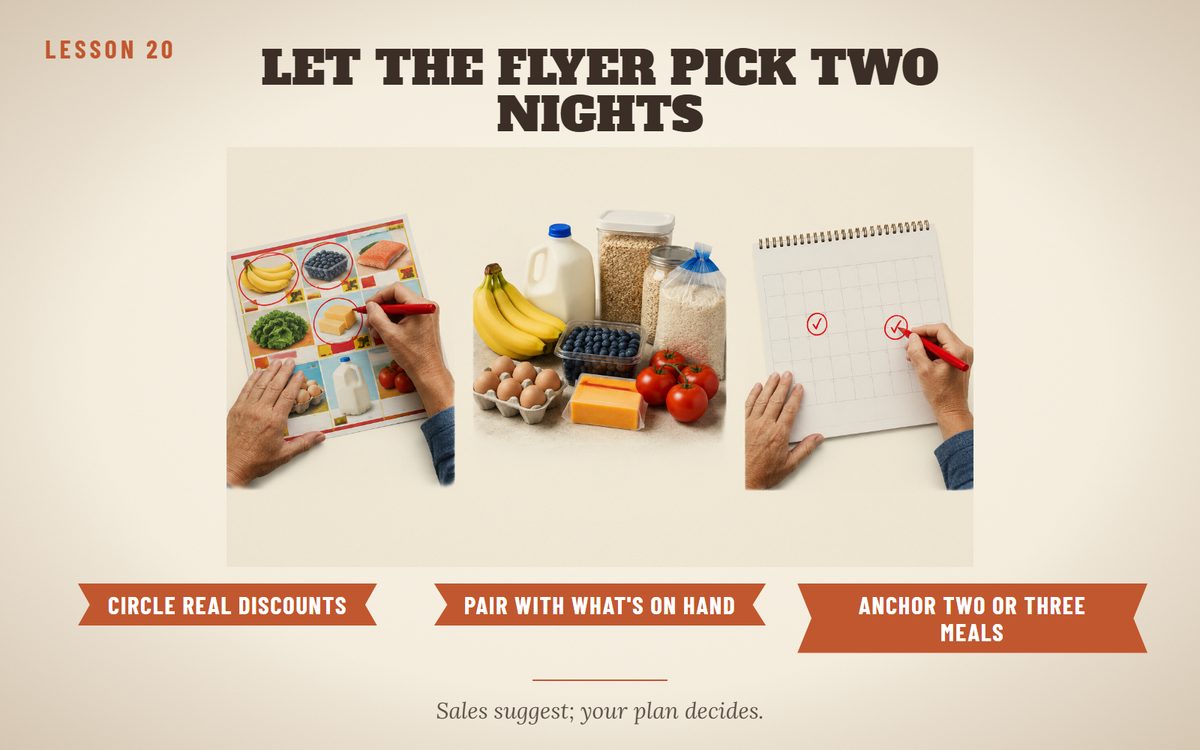
Lesson 20 drawing
Lesson 20 · page 65 · Matching Meals to Sales
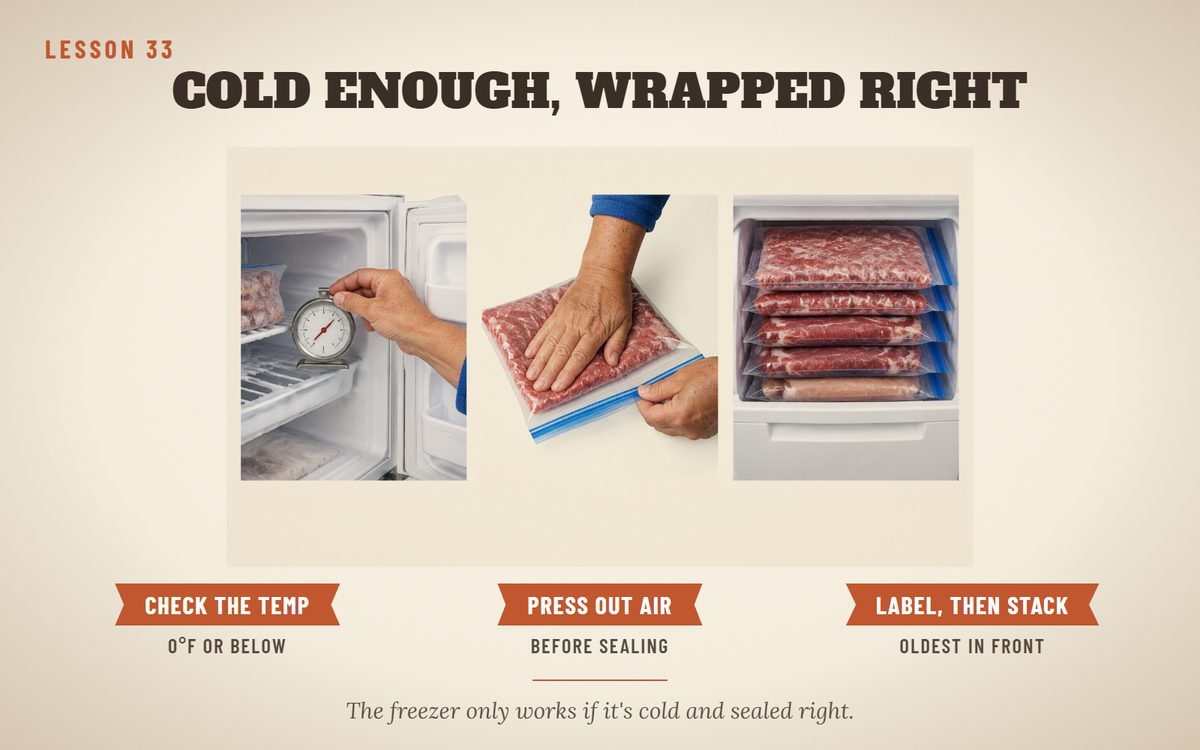
Lesson 33 drawing
Lesson 33 · page 105 · The Freezer as a Pantry
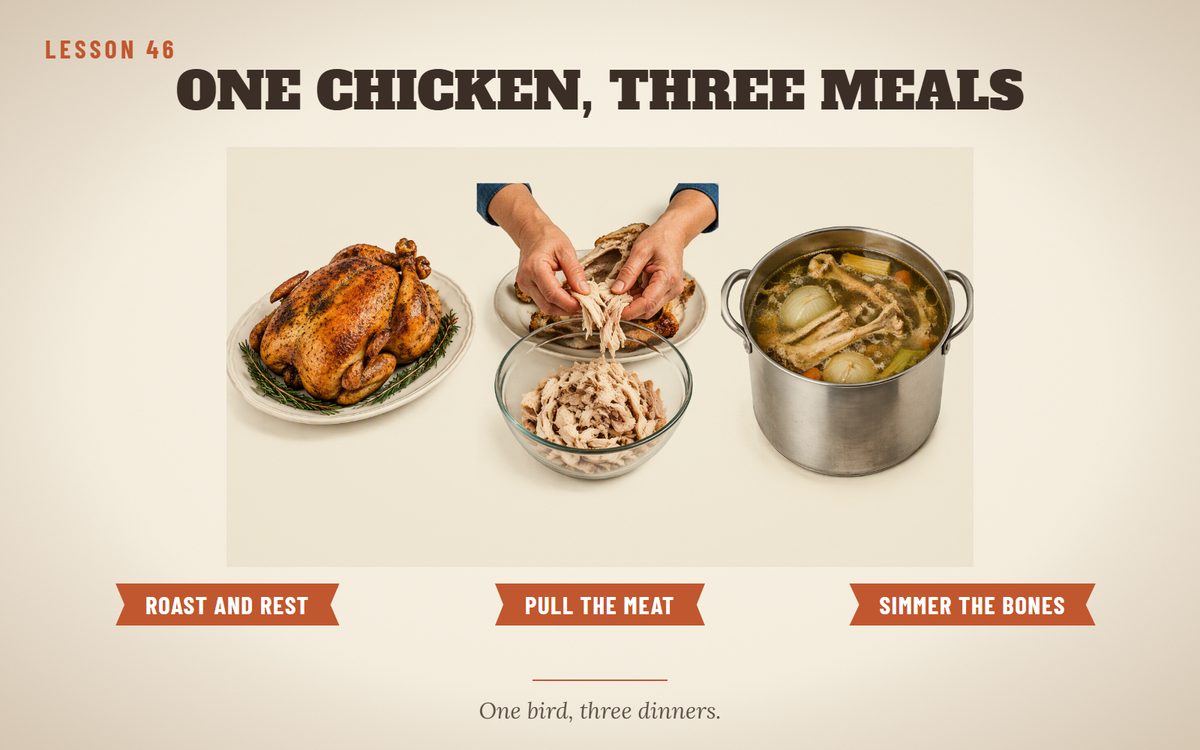
Lesson 46 drawing
Lesson 46 · page 145 · One Chicken, Three Meals
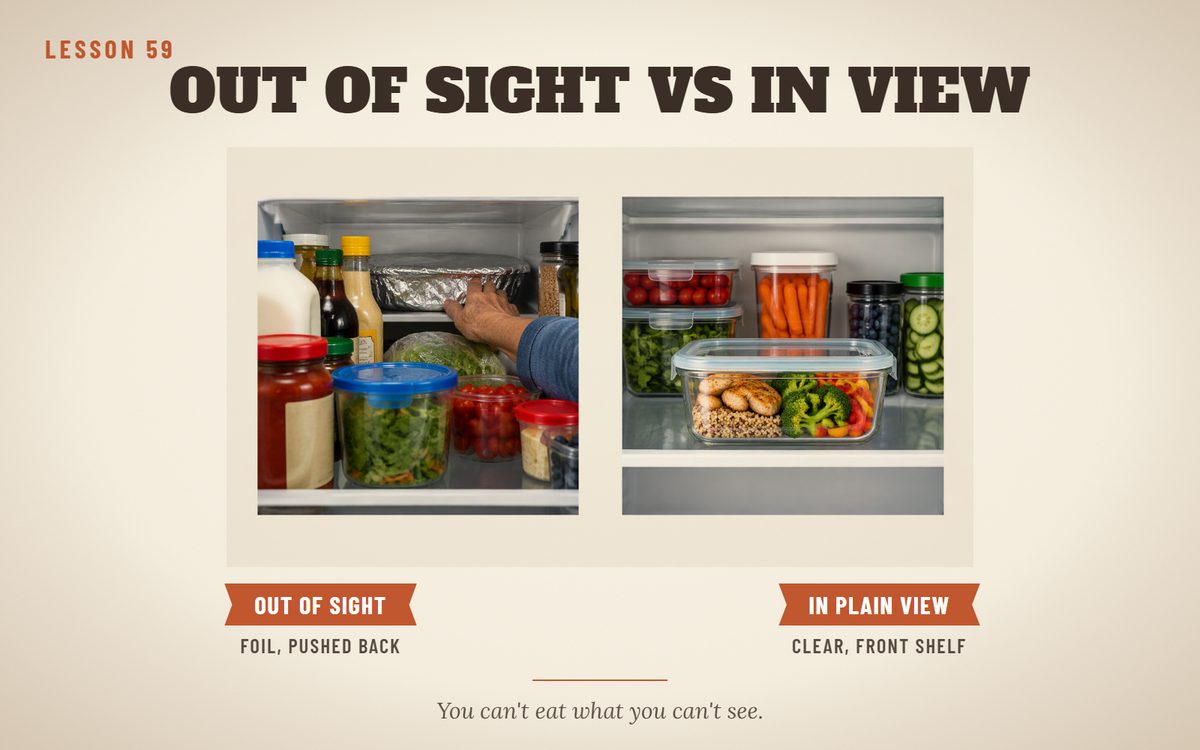
Lesson 59 drawing
Lesson 59 · page 185 · The Clear Container Rule
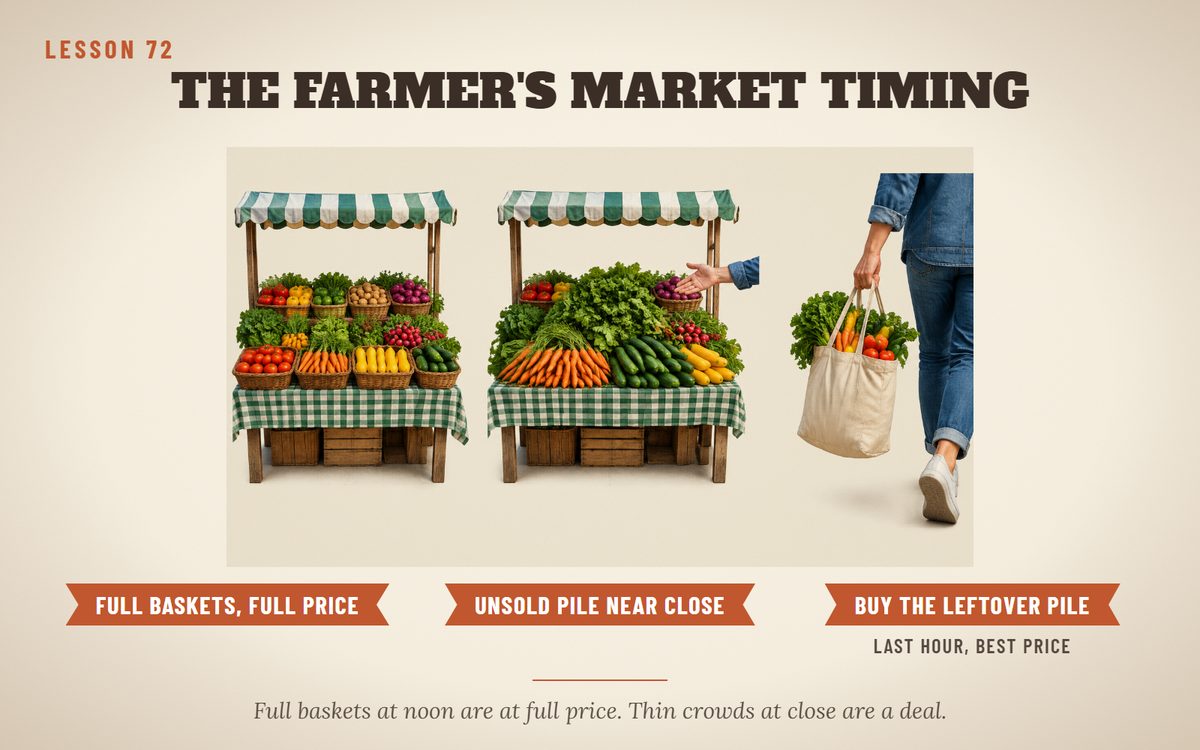
Lesson 72 drawing
Lesson 72 · page 225 · The Farmer's Market Timing
Look inside

Real pages from the book

Click any page to read it up close — exactly what opens on your phone after you pay.

The contents
How to use this book
The opening of a lesson
A full-page drawing

← swipe for more pages →

WHY THIS GOT WRITTEN DOWN
"A grocery bill doesn't lie about how careful you've been."

I raised three kids alone on a postal clerk's wage, in a town small enough that everybody's business came across my counter eventually.

I didn't have room for guessing at the grocery store — if I overspent on a Tuesday, somebody's shoes didn't get bought in October.

So I kept a price book before I knew that's what people called it: just a little notebook, prices written down in pencil, so I'd know a real sale from a sticker.

Forty-two years behind that counter, I watched the same thing happen in other kitchens — I'd hand over a light envelope one month and a fat one the next, and I could usually guess which house was eating beans that week and which one wasn't.

The careful ones weren't the ones with more money. They were the ones who wrote things down and checked them.

When I retired, I had drawers of those old price books and three grown kids who never went hungry, and I figured that was worth saying out loud instead of keeping to myself.

So I wrote it down the way I actually did it, mistakes included.

— Thelma

WHO'S TALKING

Thelma Ruiz

Thelma Ruiz

Hello, I'm Thelma. I ran the only post office in a small town in New Mexico for 42 years, and in a town that size, you see everything — who's struggling, who's steady, and why.

I raised three kids alone on a postal clerk's wage, so the grocery bill was never something I could ignore. I noticed what the careful houses did differently, and I kept my own notes the whole time.

No secrets held back anymore, no products to sell — just 42 years of counter-watching, plain and honest.

“All right, let me tell you what I actually saw.”

All 80

What's inside

    What Careful Shoppers Did at the Store

  1. 1The List Before the List
  2. 2Never Shop Hungry
  3. 3Eye Level Is Expensive
  4. 4The Unit Price Trick
  5. 5Sale Tags That Aren't Sales
  6. 6The End-Cap Trap
  7. 7One Cart, One Pass
  8. 8Cash in an Envelope
  9. 9The Ten-Minute Rule
  10. 10Store Brand or Not
  11. 11The Checkout Impulse Shelf
  12. 12Keeping the Cold Chain Safe
  13. 13The Weekly Flyer Habit
  14. 14Self-Checkout Slowdown

    Planning Meals Around a Budget

  1. 15The Sunday Plan
  2. 16Cook From What You Have
  3. 17Scaling Meals for Family Size
  4. 18One Pot, Many Nights
  5. 19The Leftover Lunch Rule
  6. 20Matching Meals to Sales
  7. 21When the Budget Runs Short
  8. 22Planning Around the Freezer
  9. 23The No-Waste Grocery List
  10. 24Cooking Twice a Week
  11. 25The Budget Per Person
  12. 26Meatless Mondays That Stick
  13. 27The Backup Pantry Meal

    Building a Pantry That Lasts

  1. 28Choosing Pantry Storage Containers
  2. 29First In, First Out
  3. 30Buying Beans by the Bag
  4. 31Building a Basic Spice Shelf
  5. 32Rice, Flour, Oats, Always
  6. 33The Freezer as a Pantry
  7. 34Canned Goods Worth Stocking
  8. 35The Oil That Doesn't Spoil
  9. 36Buying Bulk the Right Way
  10. 37The Root Cellar Habit
  11. 38Labeling What You Store
  12. 39The Six-Month Check
  13. 40What Never Goes on Sale

    Cheap Meals That Still Satisfy

  1. 41Beans and Rice Done Right
  2. 42The Egg Dinner
  3. 43Soup From Scraps
  4. 44Stretching Ground Meat
  5. 45The Casserole Habit
  6. 46One Chicken, Three Meals
  7. 47The Potato's Many Lives
  8. 48Bread That Costs Pennies
  9. 49The Filling Breakfast
  10. 50Pasta Beyond the Jar
  11. 51The Thrifty Sunday Roast
  12. 52Cooking for the Freezer
  13. 53Budget Meals That Feel Special

    Cutting Food Waste

  1. 54The Sniff Test
  2. 55Understanding Food Date Labels
  3. 56Wilted Isn't Spoiled
  4. 57The Scrap Bag for Broth
  5. 58Freezing Before It Turns
  6. 59The Clear Container Rule
  7. 60Thawing Meat Safely
  8. 61Using Up Stale Bread
  9. 62The Vegetable Drawer Fix
  10. 63Portioning to Avoid Leftovers
  11. 64Reheating Leftovers Safely
  12. 65Repurposing Sunday's Extras
  13. 66The Weekly Fridge Clean-Out

    Prices to Watch and Stores to Compare

  1. 67The Price Book
  2. 68Loss Leaders Explained
  3. 69Comparing Stores by the Basket
  4. 70The Warehouse Club Math
  5. 71Discount Grocers Worth a Try
  6. 72The Farmer's Market Timing
  7. 73Seasonal Price Swings
  8. 74When to Stock Up
  9. 75The Coupon That's Worth It
  10. 76The Cost of Loyalty Apps
  11. 77The Price Per Serving
  12. 78Watching Shrinkflation
  13. 79The Butcher Counter Advantage
  14. 80Building Your Own Price Memory
Straight answer

Who this book is for

It's for you if

  • You've started a grocery list on your phone three times and lost track of it each time.
  • You want to know if that 'sale' sticker is really a better price before it goes in the cart.
  • You're tired of throwing out food you forgot you'd bought.
  • You feed more than one person on a budget that doesn't stretch like it used to.
  • You want a pantry you can actually find things in, not just a full one.
  • You want to shop with a number in your head, not a feeling.

It's not for you if

  • You want recipes with photos and plating tips — this is about the list and the price, not the dish.
  • You're looking for coupon-stacking apps or hacks — this is pencil-and-paper, store-by-store thinking.
  • You need advice specific to food assistance programs — this book doesn't cover program rules.
Before you buy

Questions

What do I get?

One digital book — Volume One: Shopping, Stocking, and Saving — 80 lessons in six sections, with drawings, named mistakes, and a 225-number reference section at the back.

How do I get it after paying?

The download page opens right in your browser the moment your payment goes through. Click the link, and the PDF is yours.

Can I print it?

Yes. Print the whole thing or just the lessons you need — it's built to work either way.

Is it a printed book I wait for in the mail?

No. It's a PDF you download yourself, right after paying. Nothing gets mailed, nothing posted, and you don't need to create an account.

I'm not good with computers — will I manage?

If you can open an email and click a link, you can get this. The page that opens after payment has the PDF sitting right there, waiting — no apps, no passwords to remember.

What if I lose the file?

Save it somewhere you'll remember, like a folder named 'Groceries' or your downloads. If it still goes missing, write in and we'll help you get it back.

Is this a subscription?

No. One payment of $27, once, and the book is yours to keep.

Is the advice safe to follow?

Yes — this is plain household guidance on shopping, storing, and cooking carefully. It isn't medical or financial advice, and nothing here replaces your own judgment about your family's needs.

What if it isn't useful to me?

You have 14 days to decide. If it isn't useful, write in for a full refund — and you keep the book either way.

How do I pay?

Through Stripe's secure checkout — card, Apple Pay, or Google Pay. No account needed, just your card or wallet.

Write it down once, use it every week.

Eighty lessons, one price memory, $27 — with 14 days to decide if it earns a place on your fridge door.

By buying you agree to the Terms of Sale and Refund Policy.

0 people went to checkout in the last 24 hours

$2280 lessons · PDF
Get the book